Reducing Consultant Dependency: 5 Traps That Lock You In


You’ve watched it happen. The consultants leave. The team stares at a system nobody knows how to extend. The playbooks sit in a folder nobody opens. Three months later, you’re re-hiring to fix what they built.
The dependency wasn’t an accident—it was designed in.
Not maliciously, usually. But structurally. The way most consulting engagements are set up almost guarantees your team won’t be able to carry the work forward alone. And once you see the patterns, you can’t unsee them.
This isn’t a complaint about consultants. It’s an inside look at the five structural patterns that create consultant dependency—and how to avoid them whether you’re working with us or anyone else.
What Does Consultant Dependency Actually Look Like?
Consultant dependency is when an organization can’t maintain, extend, or evolve a system or capability without re-engaging the consultancy that built it. The work got done, but the knowledge didn’t transfer. Your team received a deliverable, not a capability.
It’s often invisible until someone leaves or something breaks. The signs show up later: a configuration nobody understands, a design system nobody can extend, a Salesforce instance that requires a call to the original implementers every time you need a new field.
The frustrating part? Most organizations don’t realize they’re locked in until the second or third invoice arrives for work that feels like it should have been handled internally.
Dependency isn’t about bad consultants. It’s about engagement structures that don’t account for what happens after the consultants leave. And those structures follow predictable patterns.
5 Structural Patterns That Create Consultant Dependency
These aren’t character flaws. They’re defaults—the way most engagements get set up when nobody asks different questions.
Pattern 1: The Knowledge Silo
The consultancy works in parallel to your team rather than embedded with them. They have their own Slack channel, their own standups, their own documentation repo. The work happens in a black box. By the time it’s handed over, your team is learning a finished product instead of understanding how decisions got made.
The fix: Your team should be in the room when architecture decisions happen. Not observing—participating.
Pattern 2: The Artifact Without Context
You get a beautiful component library or a detailed playbook. But nobody on your team was there when the tradeoffs were discussed. They don’t know why the system was built this way, which means they don’t know when it’s safe to change. We’ve written about what actually works in consultant knowledge transfer — and why documentation alone isn’t enough.
Documentation isn’t knowledge transfer. Context is. And context only transfers through shared work.
Pattern 3: The Expertise Gap That Never Closes
The consultancy brings senior practitioners. Your team watches them work. But watching isn’t learning, and the gap between “expert did this” and “I can do this” never closes because there’s no structured path to get there.
If your people aren’t pairing with theirs—actually building alongside them, not just attending reviews—the expertise walks out when the engagement ends. This is exactly what team enablement consulting is designed to prevent.
Pattern 4: The Scope Creep Incentive
Most consulting contracts are structured around time and materials or phased deliverables. Neither model rewards finishing faster or building your team’s capability. The incentive is to stay engaged, not to make yourself unnecessary.
This isn’t about bad intentions. It’s about misaligned structures. If the contract doesn’t explicitly reward capability transfer, it probably won’t happen.
Pattern 5: The Tribal Knowledge Trap
Key decisions live in the heads of the consultants who made them. Why did we use this API instead of that one? What’s the edge case this workflow handles? The answers exist—but they’re not written down, and they leave when the team does.
Institutional knowledge needs to be externalized as it’s created, not reconstructed after the fact.
Here’s what these patterns have in common: none of them require malice. They’re just what happens when engagements optimize for delivery without optimizing for handoff.
What Capability Transfer Actually Looks Like
Most consulting agreements include something about “training” or “knowledge transfer.” Usually it means a few sessions at the end of the engagement where someone walks through the deliverables.
That’s not capability transfer. That’s a tour of something you didn’t help build.
Real capability transfer looks like this:
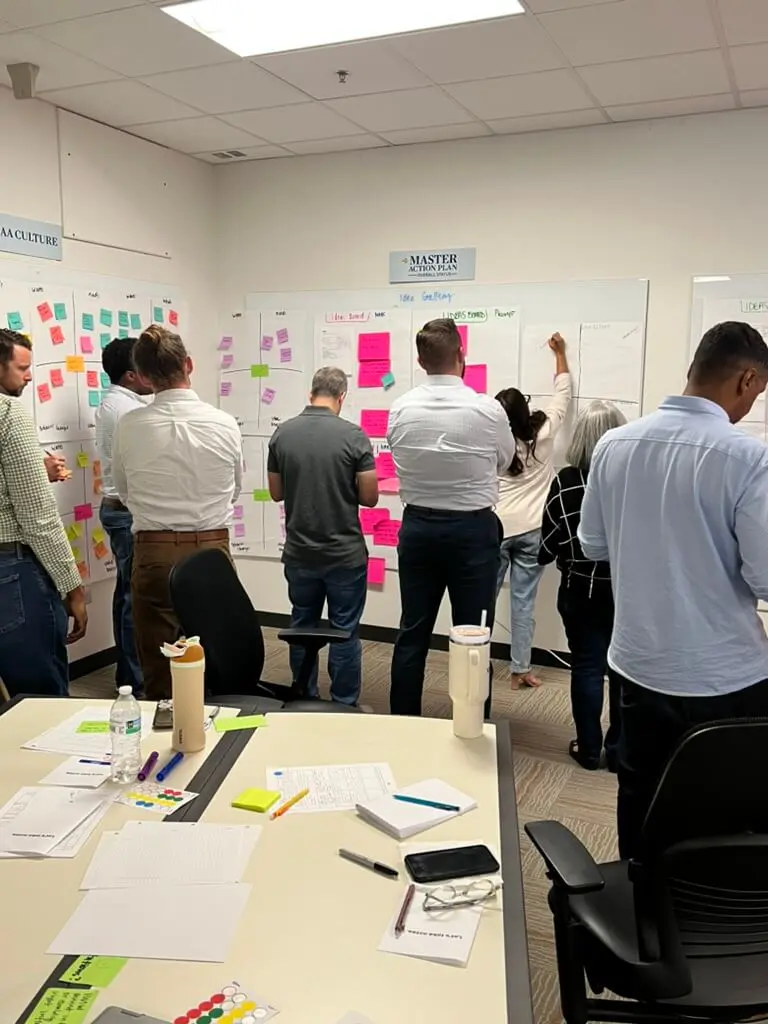
Your engineers pair with theirs. Not “shadow” or “observe”—actually write code together, make decisions together, debug together. By month two, your team should be contributing to the codebase, not just receiving it.
Your product lead joins design reviews. Not as an approver at the end, but as a participant throughout. They should be able to articulate why the system works this way—and when they’d change it.
Artifacts are co-created, not handed over. The playbook, the component library, the adoption dashboard—your team helps build them. When the engagement ends, they’re not learning something new. They’re maintaining something they already understand.
Exit criteria are defined upfront. What does “done” look like? Not “deliverables complete,” but “your team can extend this system without us.” That’s a different milestone, and it needs to be named from the start.
The goal isn’t a smooth handoff. It’s no handoff at all—because your team was building it the whole time.
How to Structure Engagements That Build Your Team
You can apply these principles to any consulting engagement, not just ours.
Start with the exit. Before you sign, ask: “What will my team be able to do at the end of this that they can’t do now?” If the answer is vague—”they’ll understand the system better”—push for specifics. What decisions can they make? What can they build independently?
Require embedded work. Your people should be in the same standups, the same Slack channels, the same design reviews. If the consultancy wants to work in a separate silo, ask why. Sometimes there are good reasons. Often there aren’t.
Define pairing ratios. For technical work, aim for at least one internal engineer working alongside each external one. Not observing—building. This slows things down in month one and pays off by month three.
Build artifacts together. If the consultancy is creating a playbook or a component library, your team should be co-authoring it. They should know what’s in it because they helped write it. We’ve outlined handoff best practices that actually work for exactly this.
Tie milestones to capability, not just delivery. “Design system shipped” is one milestone. “Your team extended the design system without us” is a better one. Structure contracts so the consultancy has incentive to make the second milestone happen.
The best consulting engagements don’t end with a handoff. They end with your team already running the thing.
Questions to Ask Before You Sign Any Consulting Contract
Use these to evaluate any engagement—including ours:
“How will our team be involved in the work, specifically?” Look for answers that include pairing, co-creation, and embedded participation. Watch for answers that describe “reviews,” “approvals,” or “training sessions” at the end.
“What will our team be able to do independently after this engagement that they can’t do now?” The answer should be concrete: “Extend the design system,” “Configure new Salesforce workflows,” “Ship features without external support.”
“How is capability transfer built into the timeline—not just the final phase?” If all the learning happens in the last two weeks, it’s not built in.
“What happens if we need to change something six months from now?” The answer you want: “Your team will be able to handle it.” The answer to watch for: “We can scope a follow-on engagement.”
“Can you show me an example of a previous client who now operates independently?” If the consultancy can’t point to teams who no longer need them, that tells you something.
These questions aren’t adversarial. Good consultancies will welcome them. The ones who bristle might be telling you something about their model.
What Changes When You Design for Independence
When engagements are structured for capability transfer, a few things shift.
First, the timeline changes. Building capability alongside the work takes longer in the early weeks—there’s more teaching, more pairing, more context-sharing. But by month three, the work accelerates because your team is contributing instead of waiting.
Second, the relationship changes. The consultancy becomes a teacher, not just a builder. The goal isn’t to impress you with expertise. It’s to give that expertise away.
Third, the ending changes. There’s no dramatic handoff. No frantic documentation sprint. The engagement winds down because your team is already running things—and they have been for weeks.
This is what we mean when we say “we build, we teach, you keep it.” The product ships. The capability stays. And when you need outside help again—because you will, eventually—it’s for something new. Not to maintain what we left behind.
Reducing consultant dependency isn’t about avoiding consultants. It’s about choosing the right digital experience consultancy—one that makes your team stronger instead of more reliant.
The patterns are predictable. And now that you know them, you can ask different questions before you sign.
Ready to talk about what capability transfer looks like for your team? Get in touch—we’ll share how we structure engagements so the expertise stays when we go.